
Indian benchmark indices Sensex and Nifty experienced a significant slump in early trade, driven by a sharp surge in crude oil prices above USD 120 per barrel, weak global market trends, and continued foreign fund outflows.

Bajaj Finserv has few opportunities and challenges to overcome in 2015.

Indian stock markets extended their gains for a second consecutive session, with the Sensex closing 736 points higher, driven by a global equity rally and a significant drop in crude oil prices following the finalisation of a peace deal between the US and Iran to end their 107-day conflict and reopen the Strait of Hormuz.

Indian benchmark indices Sensex and Nifty closed flat, paring early gains due to renewed hostilities between the US and Iran, which unsettled investor sentiment and led to profit booking in metal, oil & gas, and telecom shares.

Despite the Reserve Bank of India's (RBI) and the government's recent initiatives to attract foreign capital, which are expected to alleviate pressure on long-duration bonds, most debt fund managers are maintaining a cautious stance, favouring shorter-duration papers due to global uncertainties and potential future rate hikes.

Stock market benchmark indices Sensex and Nifty surged in early trading session on Tuesday after India and the US agreed to a trade deal under which Washington will bring down the reciprocal tariff on Indian goods to 18 per cent from current 25 per cent.

Indian benchmark indices, Sensex and Nifty, closed marginally higher after a volatile trading session, driven by value buying in IT and select blue-chip counters, despite global crude price hikes and a weak rupee.
Munich-based Allianz will explore new opportunities in the Indian insurance market not only as an investor but also as an operator, the company told Business Standard on Tuesday. "India will continue to be one of Allianz's main growth markets, and Allianz will explore new opportunities to further grow its participation in the Indian insurance market in the future, not only as an investor but also as an operator," the company said.

Indian benchmark indices Sensex and Nifty experienced a decline due to renewed geopolitical concerns in the Strait of Hormuz, a strained US-Iran ceasefire, and the rupee hitting a record low against the US dollar.
Stock market benchmark indices Sensex and Nifty ended 2.5 per cent higher on Tuesday after India and the US agreed to a trade deal under which Washington will bring down the reciprocal tariff on Indian goods to 18 per cent.
Indian equities on Dalal Street saw volatility as global market trends and weak rupee impacted investor sentiment. Track Sensex, Nifty50 movement and key market drivers for May 5, 2026.

Tata Motors, State Bank of India, UltraTech Cement, Tata Consultancy Services, Tata Steel and Asian Paints were among the other laggards from the 30-share pack. Maruti, Bharti Airtel, Power Grid, Hindustan Unilever and HDFC Bank were among the gainers.

Indian stock market indices Sensex and Nifty experienced a significant decline, driven by rising crude oil prices, sustained foreign fund outflows, and selling pressure in major bank stocks.
Market sentiment is likely to remain cautious as investors position themselves for the upcoming Union Budget and the US Fed's interest rate decision, where expectations are muted.

Indian benchmark indices, Sensex and Nifty, saw a significant rebound in early trade, driven by a decline in crude oil prices. This drop followed US President Donald Trump's announcement of progress in negotiations with Iran towards an agreement to end the war, leading to a temporary pause in 'Project Freedom' to escort ships through the Strait of Hormuz. Track Nifty 50 and BSE Sensex performance and key global triggers.

Benchmark equity indices Sensex and Nifty rebounded on Thursday after three sessions of losses, tracking gains in global markets after US President Donald Trump struck a conciliatory tone on Greenland. In a volatile session, the 30-share BSE Sensex climbed 397.74 points, or 0.49 per cent, to close at 82,307.37.

Indian equity benchmarks Sensex and Nifty surged nearly 1 per cent, driven by strong earnings reports from FMCG and auto sectors, alongside a rally in Asian markets and signs of de-escalation in geopolitical tensions.
Indian stock market indices Sensex and Nifty experienced a significant drop in early trade, reversing a three-day rally. The decline was triggered by a sharp increase in crude oil prices, weak global market trends, and continuous outflows of foreign funds.

The OnePlus 15T has been officially listed in OnePlus/OPPO's China store and is set to launch on March 24, 2026, marking its entry as a compact flagship focused on performance and battery life.

Indian markets on Dalal Street rallied sharply as easing tensions in the US-Iran conflict and stable oil prices boosted sentiment. Track Nifty 50 and BSE Sensex performance and key global triggers.

Indian equities on Dalal Street saw volatility as global market trends and fresh tariff concerns linked to Donald Trump impacted investor sentiment. Track Sensex, Nifty50 movement and key market drivers for March 30, 2026.
From the 30-Sensex firms, Eternal, Infosys, Asian Paints, UltraTech Cement, Bajaj Finance, HCL Tech and Titan were among the biggest laggards. However, Tata Steel, Mahindra & Mahindra, Bajaj Finserv and Axis Bank were among the biggest gainers.

Equity benchmark indices Sensex and Nifty rebounded sharply by nearly 1 per cent on Monday, driven by strong buying in power, banking, and financial stocks.

Benchmark equity indices Sensex and Nifty extended their gains for the third straight session on Wednesday, driven by last-hour buying in bank, metal, and FMCG shares.
From the 30-Sensex firms, Eternal declined by 4.02 per cent, followed by Bajaj Finance (3.88 per cent), Sun Pharma, InterGlobe Aviation, Trent, Asian Paints, Mahindra & Mahindra and Bajaj Finserv. HDFC Bank emerged as the only gainer from the pack.

India's financial sector is dominated by large government-owned and private-sector banks.

Benchmark equity indices Sensex and Nifty tumbled in early trade on Wednesday, tracking a bearish trend in Asian markets, as the conflict in West Asia widened, driving oil prices higher.
Indian stock markets tumbled sharply with the Sensex falling 800 points and nearly 4 lakh crore wiped out in a single session. Here are the 6 key factors, including rupee weakness and global cues, behind the crash.
Benchmark indices Sensex and Nifty tumbled in early trade on Friday after a two-day rally, tracking a weak trend in global peers, as the US-Iran conflict continues to be a key overhang for the markets. Track Sensex, Nifty50 movement and key market drivers for March 27, 2026.

Prudential plc has announced its acquisition of a 75 per cent stake in Bharti Life Insurance for approximately 3,500 crore, a strategic move to secure majority ownership in the Indian life insurance market. This acquisition necessitates Prudential reducing its holding in ICICI Prudential Life Insurance to below 10 per cent.

Bajaj Finance's shares fell more than 7 per cent on Tuesday after it trimmed growth guidance for FY26, from 24-25 per cent projected earlier to 22-23 per cent.
Among Sensex firms, Trent, HDFC Bank, Adani Ports, ICICI Bank, Bajaj Finserv, Bharat Electronics, Titan and Asian Paints were the major laggards. However, State Bank of India, Infosys, Axis Bank and Maruti were among the gainers.

Among Sensex firms, Axis Bank tanked the most by 5.03 per cent. Eternal, HCL Tech, Bajaj Finserv, Tata Steel, UltraTech Cement and Bajaj Finance were also among the laggards. However, Titan, Bharti Airtel, Mahindra & Mahindra and Asian Paints were among the gainers.

Indian equity investors experienced a significant loss of 16.32 lakh crore due to a two-day stock market decline fueled by escalating geopolitical tensions involving the US, Israel, and Iran.
Indian stock market benchmark indices Sensex and Nifty experienced a significant decline, driven by escalating tensions in the Middle East and rising crude oil prices.
Indian stock markets recovered from early losses to close higher, driven by value buying in IT and banking shares and a rebound in the rupee.
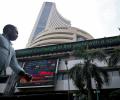
Benchmark stock indices Sensex and Nifty closed on a flat note in a choppy session on Wednesday as gains in PSU banks and auto shares were offset by losses in IT stocks.
From the Sensex firms, Bharat Electronics, Mahindra & Mahindra, Titan, NTPC, State Bank of India, Adani Ports, Tata Motors Passenger Vehicles and Bajaj Finserv were among the major laggards. Tata Consultancy Services, ICICI Bank, Infosys and HDFC Bank were among the gainers.

Stock markets declined for the second day in a row on Friday, with the Sensex tumbling 721 points due to heavy selling in financial, IT and oil & gas shares amid persistent foreign fund outflows.
Benchmark indices Sensex and Nifty experienced a significant decline, falling over 1 per cent due to foreign fund outflows and global uncertainties.
